Table of contents
- Common Valve Performance Issues in Summer Conditions
- Quick-Reference Troubleshooting Table: Symptoms, Causes, and Corrective Actions
- Control Valve Maintenance: Best Practices for Reliable Summer Performance
- Supporting Valve Systems That Impact Summer Reliability
- Preventive Maintenance Schedule: Building a Reliable Valve Maintenance Program
- Pre-Summer Valve Maintenance Checklist
- Keep Industrial Valves Operating Reliably Through Peak Summer Demand
- Frequently Asked Questions (FAQs)
High summer temperatures and rising production loads put industrial valve performance under stress, making reliability critical to avoid unplanned downtime. Heat, continuous operation, and high flow rates often reveal hidden issues in control loops that remain stable in normal conditions.
Valve failures impact systems: a sticking control valve can force manual operation, a leaking solenoid valve can compromise safety, and a drifting positioner can affect product quality.
This guide follows a structured reliability framework:
Performance Issue → Root Cause Identification → Troubleshooting → Corrective Maintenance → Long-Term Reliability.
Whether you're using Fisher Control Valves, Samson Control Valves, or ASCO Solenoid Valves, the diagnostic approach remains consistent: detect, diagnose, correct, and prevent recurrence.
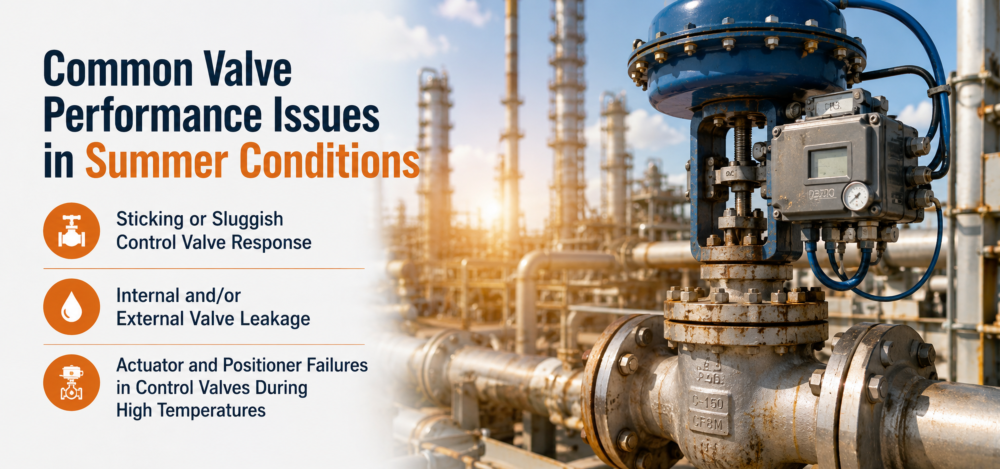
Common Valve Performance Issues in Summer Conditions
Most valve failures don't happen suddenly. They build gradually and show early warning signs that experienced maintenance teams can quickly recognize. The key is not just spotting the symptom, but linking it to the root cause before it escalates into downtime.
Sticking or Sluggish Control Valve Response: Causes and Diagnosis
A sticking or sluggish control valve is one of the most frequent issues during summer operation. It often develops due to actuator issues, positioner faults, packing friction, or internal wear. High temperatures make this worse by causing thermal expansion, which increases stem friction and affects smooth valve movement.
To diagnose the issue, start with a simple isolation check:
- If the valve moves freely using manual override → the issue is likely in the positioner, air supply, or instrumentation
- If resistance is still present → the issue is mechanical, typically within the valve body or packing
This separation helps narrow down troubleshooting time significantly.
Internal and/or External Valve Leakage: Identification and Summer Risks
Leakage is one of the most critical and costly valve problems, both from a safety and efficiency standpoint.
External leakage is visible and can usually be detected early, while internal leakage is more subtle and must be identified through process behavior such as unexpected flow, pressure build-up, or temperature variation in a closed state.
Summer operating conditions accelerate leakage due to repeated thermal cycling and higher system pressures during peak demand. This becomes especially important in steam and high-pressure applications where even minor leakage can escalate quickly.
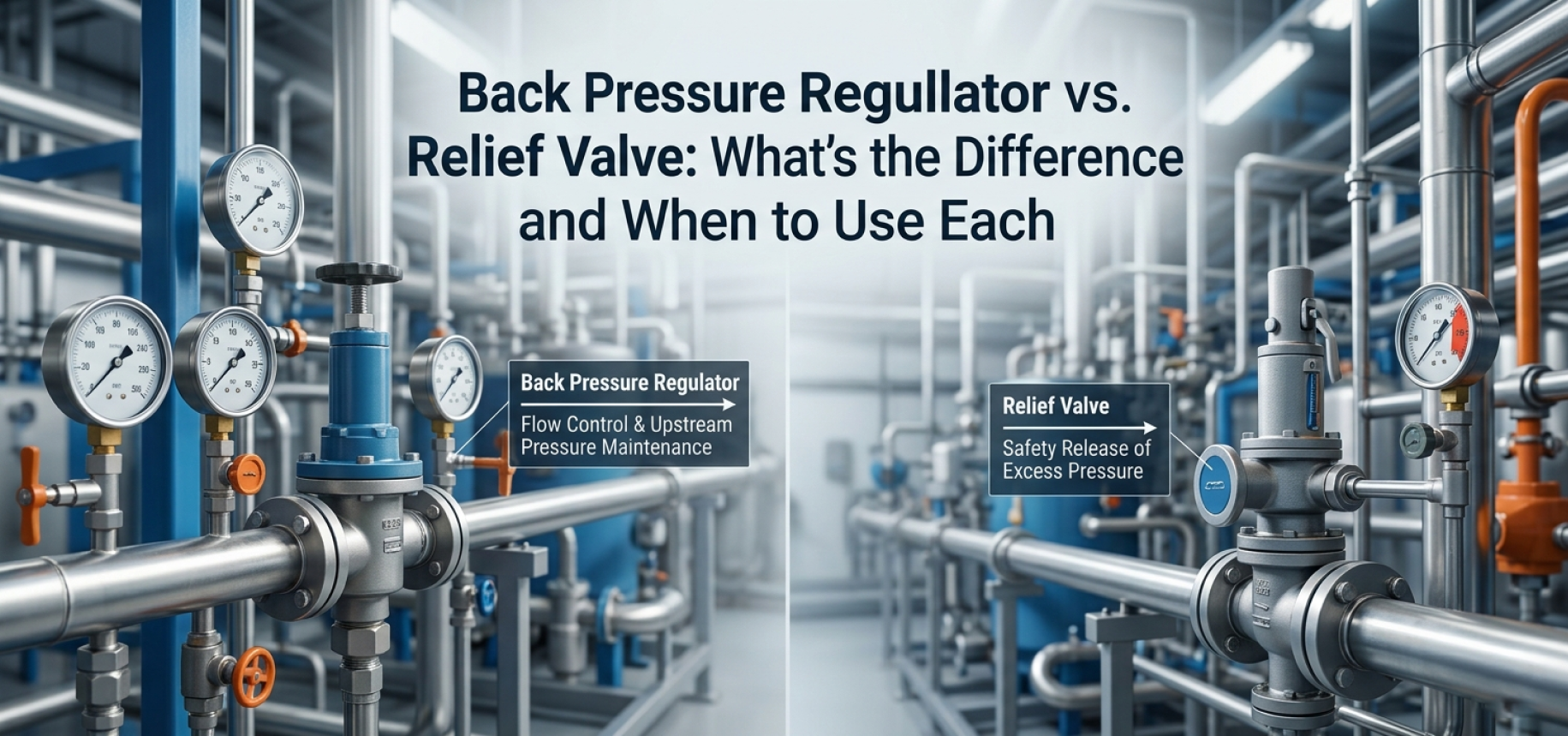
For better insights, visit our Back Pressure Regulator vs. Relief Valve post that provides clarity on how pressure control valves behave in such scenarios.
Actuator and Positioner Failures in Control Valves During High Temperatures
Actuator and positioner issues are also common during high-temperature operation. Actuators may suffer from diaphragm damage, spring fatigue, or unstable air supply, while positioners can drift due to heat-sensitive components.
The challenge is that the valve may still move, but not accurately. This leads to control errors that are not immediately visible in manual checks.
Digital systems such as Fisher Control Valves with Fisher DVC6200 require regular calibration checks to ensure accurate positioning, especially before and during peak summer operating conditions.
Quick-Reference Troubleshooting Table: Symptoms, Causes, and Corrective Actions
The table below provides a structured reference for common valve issues in industrial operations. It helps quickly connect symptoms to likely causes and corrective steps for faster troubleshooting and restoration of performance.
| Symptom | Probable Cause(s) | Corrective Action |
|---|---|---|
| Valve sticking or slow response | Actuator spring failure, dirty positioner, and low air supply | Inspect the actuator, clean the positioner, and verify the supply pressure |
| Internal leakage/seat leakage | Worn trim, damaged seat, and high differential pressure | Replace trim components, lap seat, and verify pressure ratings |
| External leakage (packing) | Worn packing, improper torque, and thermal cycling stress | Tighten the gland, replace the packing, and use high-temperature packing for hot service |
| Hunting/oscillation | Aggressive controller tuning, undersized valve, and unstable feedback loop | Retune controller, verify valve sizing, and recalibrate positioner |
| No valve movement/zero response | Failed positioner signal, solenoid coil failure, and loss of air supply | Check 4–20 mA signal, test solenoid coil resistance, and verify air lines |
| Excessive noise/cavitation | High pressure drop, flashing service, and incorrect trim selection | Install anti-cavitation trim, reduce pressure drop, and verify valve sizing |
| Positioner calibration drift | Temperature extremes, vibration, and component wear | Recalibrate zero/span, inspect feedback linkage, and verify HART signal stability |
| Solenoid valve not actuating | Burned coil, low voltage, clogged orifice, and contaminated media | Test coil continuity, verify voltage, clean orifice, and replace coil if needed |
| Actuator fails to hold position | Diaphragm rupture, spring fatigue, and air leakage in tubing | Pressure-test actuator, replace diaphragm/spring, and inspect tubing integrity |
| Valve fails open/fails closed | Loss of instrument air, solenoid de-energized, and incorrect spring setup | Verify fail-safe configuration, restore air supply, and test spring force |
Control Valve Maintenance: Best Practices for Reliable Summer Performance
Industrial control valves are the core of process control systems, and their maintenance directly impacts stability, efficiency, and product quality. When properly maintained, they operate quietly in the background. When neglected, they quickly become a source of process variation, downtime, and repeated troubleshooting.
A strong maintenance approach focuses on early detection of wear, stable pressure control, and ensuring smooth mechanical response before peak summer stress conditions amplify small issues.
Fisher Control Valves
Fisher control products used in industrial systems include rotary control valves, gas regulators, and auxiliary pressure regulators. Each valve type has distinct operating behavior and maintenance requirements, especially during high-load summer conditions.
Fisher D4 Control Valve (Rotary Control Valve)
The Fisher D4 is a compact rotary control valve used in a wide range of general service applications. Its rotary design requires maintenance focused on moving and sealing components rather than traditional stem packing systems.
Key maintenance priorities include:
- Actuator spring inspection for consistent response
- Shaft seal integrity to prevent leakage
- Bearing wear and smooth rotational movement
Unlike linear control valves, rotary valves experience wear primarily at the shaft interface. When shaft seals degrade, they can lead to both external leakage and increased operating friction, resulting in sluggish response and reduced control accuracy.
Fisher 167DA (Demand-Flow Gas Pressure Regulator)
The Fisher 167DA is a demand-flow regulator commonly used in steam and gas utility systems, particularly during peak summer demand conditions where pressure stability is critical.
Key maintenance priorities include:
- Diaphragm condition and flexibility
- Outlet pressure stability under various loads
- Seat integrity and sealing performance
A key performance warning is creep, where outlet pressure slowly rises above the setpoint. This typically indicates diaphragm fatigue or seat wear and requires immediate corrective action to prevent downstream instability.
Fisher 67CFR, Fisher 1301F2, Fisher MR95/MR98 Series (Instrument and Auxiliary Pressure Regulators)
Fisher 67CFR, Fisher 1301F2, Fisher MR95/MR98 Series are auxiliary regulators that are responsible for maintaining a stable pressure supply to instrumentation systems, control valves, actuators, and pilot lines. While often overlooked, they play a critical role in overall valve performance.
Key maintenance priorities include:
- Stable and accurate outlet pressure control
- Clean and unrestricted filtration paths
- Adequate supply pressure to downstream devices
Even small fluctuations in these regulators can create system-wide issues such as positioner instability, erratic valve movement, or control loop deviation. In many cases, performance problems traced to control valves actually originate from unstable instrument air or supply pressure regulation.
Samson Globe Control Valves
Globe control valves are widely used in demanding throttling applications where precise flow regulation is required under various pressure and temperature conditions. The Samson control valve range is known for reliable performance in harsh process environments, but summer operating conditions place additional stress on trim, packing, and actuation systems.
Maintenance for globe valves should focus on three key areas:
- Internal Trim Condition
- Packing Performance
- Actuator Efficiency
Samson 3244 Globe Control Valve (Globe Valve Trim Condition and Internal Wear)
The Samson 3244 is a compact globe control valve designed for high-performance control applications. It's commonly exposed to elevated pressure and temperature conditions, making trim conditions a critical maintenance focus.
Key inspection points include:
- Seat ring condition and sealing integrity
- Plug and stem wear or deformation
- Guide bushing wear and alignment
High-temperature operation accelerates wear mechanisms such as erosion, galling, and surface pitting on trim components. Any visible damage to the seat or plug surfaces should be addressed before peak summer operation to avoid control instability and leakage issues.
Samson 3241 Globe Control Valve (Packing System Integrity and Leakage Control)
The Samson 3241 is designed for precise throttling under challenging process conditions, where packing performance plays a major role in long-term reliability.
Key maintenance priorities include:
- Packing ring condition and wear assessment
- Gland follower torque adjustment
- Leakage monitoring under thermal stress
Packing systems in globe valves are highly sensitive to installation torque. Over-tightening increases stem friction and leads to sluggish valve response, while under-tightening increases the risk of external leakage. A condition-based replacement approach is recommended, especially in high-temperature summer operation.
Samson 3271 Pneumatic Piston Actuator (Pneumatic Actuation System Performance)
The Samson 3271 pneumatic piston actuator is used with globe valve assemblies where high thrust output is required for tight shutoff or difficult-to-stroke applications.
Key maintenance checks include:
- Piston seal condition and wear
- Cylinder bore integrity
- Stem coupling alignment and mechanical coupling tightness
Piston seal degradation is a common cause of reduced actuator output force. When combined with increased packing friction in high-temperature conditions, this can result in sluggish or incomplete valve stroke response. Proper alignment and seal health are essential for consistent actuation performance.
Solenoid Valve
Solenoid valves are small but critical components in automated systems. A single failure can disrupt pilot signaling, safety shutdowns, or process automation. Rising summer temperatures increase electrical and mechanical stress, making preventive maintenance essential for reliable operation.
ASCO 8327 (General-Purpose Solenoid Valves)
The ASCO 8327 is widely used for pilot and utility service applications where reliable switching is essential. Its simple design and dependable operation make it a common choice for automated control systems across multiple industries.
Key maintenance priorities include:
- Verify coil voltage and resistance
- Inspect electrical connections
- Check plunger movement for obstruction
- Clean the orifice and plunger guide as needed
If the coil energizes but the valve does not actuate, mechanical obstruction or contamination is often the root cause.
ASCO 8210 (General-Purpose Solenoid Valves)
The ASCO 8210 series is used across a broad range of general-purpose fluid control applications and requires particular attention during summer operation. These valves are frequently installed in continuously operating systems where electrical reliability directly impacts process uptime.
Key maintenance priorities:
- Confirm coil temperature ratings match operating conditions
- Verify enclosure ventilation and heat dissipation
- Inspect terminal connections for corrosion or looseness
- Measure voltage under load to identify intermittent faults
Loose electrical connections can create sporadic operation that is often mistaken for a valve failure.
ASCO 8551 (High-Pressure Solenoid Valves)
The ASCO 8551 is designed for demanding high-pressure and high-flow applications where seat integrity is critical. These operating conditions place greater stress on internal components, making routine inspection essential for long-term reliability.
Key maintenance priorities include:
- Inspect internal seals for wear
- Verify seat condition and shutoff performance
- Monitor for downstream pressure buildup when closed
- Check for leakage across the seating surface
Higher differential pressures accelerate seat wear, making regular inspection essential for maintaining reliable shutoff.
Magnatrol Solenoid Valves (Steam and High-Temperature Solenoid Valves)
Magnatrol solenoid valves are specifically engineered for steam and high-temperature liquid service, where conventional solenoid valves may struggle with heat-related wear. Their heavy-duty construction helps withstand severe operating conditions, but routine maintenance remains critical for dependable performance.
Key maintenance priorities include:
- Inspect coil insulation integrity
- Check the bonnet assembly condition
- Verify compatibility and condition of internal seals
- Monitor valve performance during temperature cycling
Although designed for severe-service applications, these valves still require routine inspection to ensure reliable operation under sustained summer temperatures.
Effective solenoid valve maintenance starts with identifying whether a problem is electrical, mechanical, or contamination-related. Routine inspections and timely corrective actions help prevent unexpected failures, improve reliability, and maintain consistent automation performance during peak summer operating conditions.
Supporting Valve Systems That Impact Summer Reliability
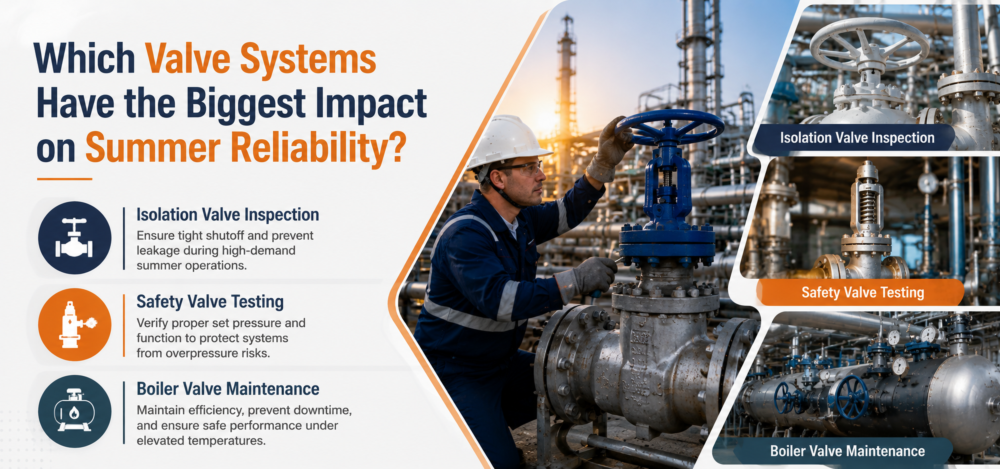
Control valves are only one part of a reliable process system. Isolation valves, safety valves, and boiler system valves also require seasonal inspection to prevent performance issues during periods of peak demand.
Isolation Valve Inspection for Reliable Plant Operation
Isolation valves play a critical role in equipment protection, maintenance activities, and emergency shutdown procedures. Valves such as Velan Valves are commonly used in isolation, throttling, and flow-control applications where dependable operation is essential.
Summer inspection priorities include:
- Check the packing condition and leakage signs
- Verify stem thread condition and lubrication
- Inspect the handwheel and actuator mounting hardware
- Confirm smooth valve operation through full travel
- Test check valves for proper closure and reverse-flow prevention
In steam and high-pressure gas systems, a check valve that fails to close properly can create damaging pressure surges and compromise system safety during shutdown events.
Safety Valve Testing Before Peak Summer Operation
Safety valves provide the final layer of protection against over-pressure events. Because summer operating conditions often increase system loads, verifying relief valve performance before peak demand periods is essential.
Key verification activities include:
- Confirm testing intervals meet regulatory requirements
- Verify set pressure accuracy
- Inspect for leakage, corrosion, or mechanical damage
- Review testing records and compliance documentation
Routine testing helps ensure safety valves perform as intended during critical over-pressure events. For additional guidance, see Safety Valve Testing Requirements.
Boiler Valve Maintenance and System Reliability
Industrial boilers contain numerous valves that directly affect system efficiency, pressure control, and operational safety. During summer operation, higher steam demand and elevated condensate temperatures place additional stress on these components.
Valve inspections should include:
- Feedwater control valves
- Steam pressure regulators
- Isolation valves
- Condensate control valves
- Safety and relief valves
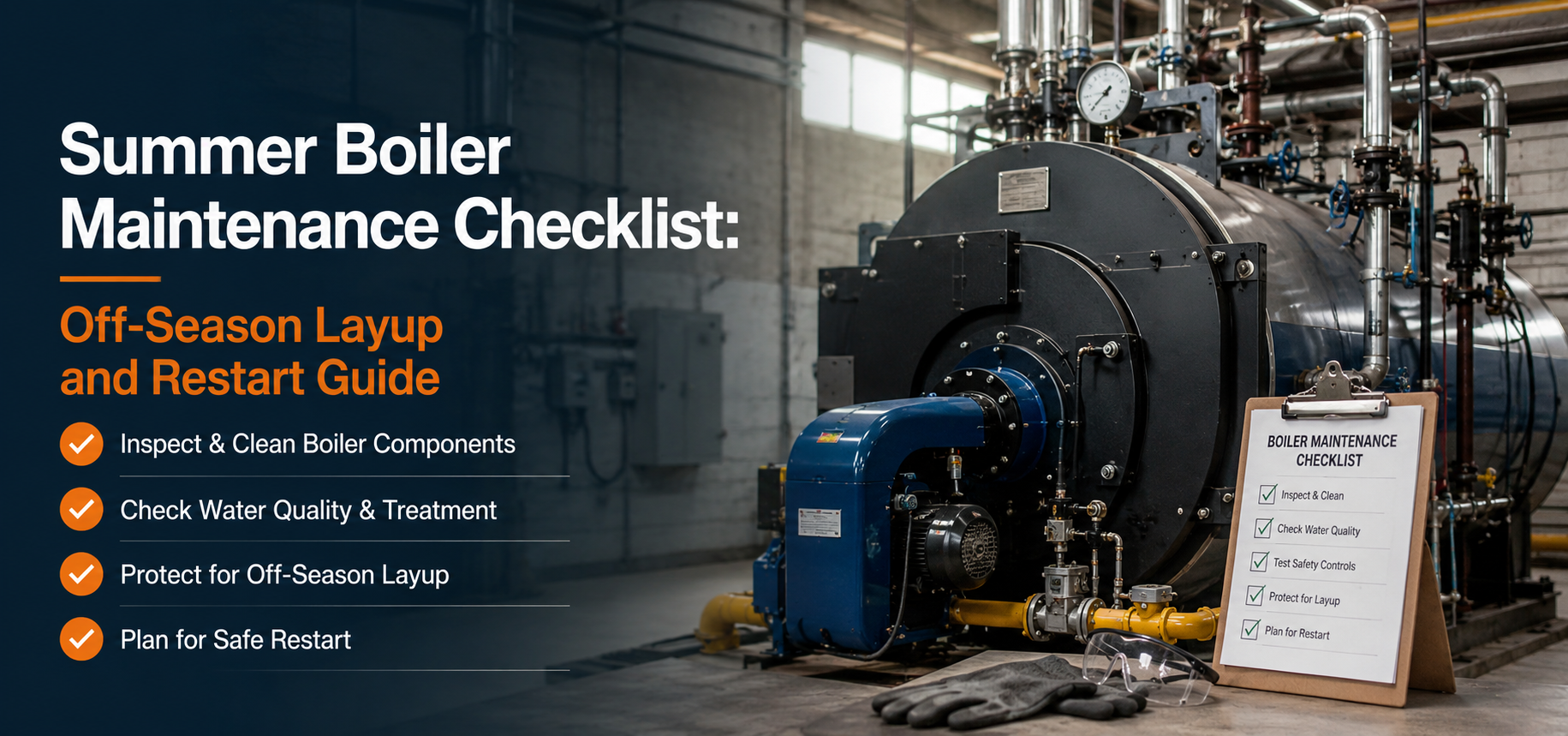
Integrating valve inspections into a broader preventive maintenance program helps identify issues before they affect boiler performance or plant uptime. For a structured seasonal approach, refer to the Summer Boiler Maintenance Checklist.
Summer reliability depends on more than control valve performance alone. Regular inspection of isolation valves, safety valves, and boiler system valves helps reduce unplanned downtime, improve operational safety, and maintain stable process performance during peak operating conditions.
Preventive Maintenance Schedule: Building a Reliable Valve Maintenance Program
Reactive maintenance often results in higher costs, unplanned downtime, and shortened equipment life. A structured preventive maintenance program helps identify issues early on, improve valve reliability, and support informed repair-or-replace decisions.
Recommended Valve Inspection Frequencies
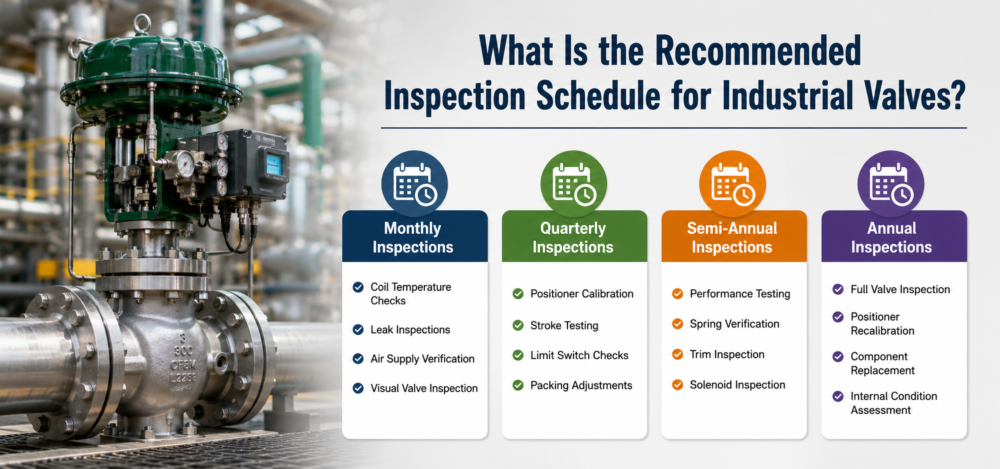
Inspection intervals should be based on valve criticality, operating conditions, and service history. A typical maintenance schedule includes:
Monthly Inspections
- Solenoid valve coil temperature checks
- External leak inspections
- Actuator air supply pressure verification
- Visual inspection of valve bodies, stems, and packing areas
Quarterly Inspections
- Positioner calibration verification
- Actuator stroke testing
- Limit switch functionality checks
- Solenoid valve electrical continuity testing
- Packing adjustments as needed
Semi-Annual Inspections
- Control valve performance evaluation
- Actuator spring force verification
- Trim inspection on high-cycle or severe-service valves
- Internal inspection of critical-service solenoid valves
Annual or Turnaround Inspections
- Complete valve disassembly and internal inspection
- Evaluation of trim, seats, packing, guides, and actuators
- Positioner recalibration
- Replacement of soft goods in steam and high-temperature applications
Documenting Valve Condition for Predictive Maintenance
Inspection records are essential for identifying performance trends and preventing unexpected failures. Tracking recurring issues, such as packing wear, positioner drift, or increasing coil resistance, helps maintenance teams schedule corrective action before reliability is affected.
At a minimum, maintenance records should include:
- Valve tag number and location
- Inspection date and technician
- Observed condition and measurements
- Adjustments or repairs performed
- Parts replaced
- Next scheduled inspection date
Consistent documentation transforms maintenance from reactive troubleshooting into a predictive reliability strategy, reducing emergency repairs and improving long-term valve performance.
Pre-Summer Valve Maintenance Checklist
Preparing valves before peak summer demand helps reduce unplanned downtime, improve process stability, and identify potential failures before they impact operations. Use the following checklist to verify valve readiness across critical systems.
Control Valve Checklist
- Verify positioner calibration and zero/span settings
- Inspect packing condition and adjust gland torque as needed
- Stroke-test critical valves and confirm response time
- Check actuator diaphragms and springs for wear or damage
- Inspect positioner filters and verify instrument air quality
- Review diagnostics on digital positioners, including the Fisher DVC6200
- Look for signs of cavitation or flashing in throttling applications
Solenoid Valve Checklist
- Measure coil resistance on safety-critical valves
- Confirm enclosure ventilation and acceptable ambient temperatures
- Cycle-test valves and verify response times
- Inspect seals on steam and high-temperature service valves
- Check electrical connections for corrosion or looseness
- Verify proper fail-safe operation during power loss
Actuator and Regulator Checklist
- Inspect actuator mounting hardware and connections
- Verify adequate instrument air supply pressure
- Check regulator setpoints and output stability
- Inspect volume boosters and quick-exhaust valves
- Test fail-safe functionality on critical actuated valves
- Review safety valve testing schedules and compliance status
Quick Tip: Integrating these inspections into your seasonal maintenance plan helps improve valve reliability and reduces the risk of summer-related process disruptions.
Keep Industrial Valves Operating Reliably Through Peak Summer Demand
Summer operating conditions place additional stress on control valves, solenoid valves, regulators, actuators, and supporting valve systems. A proactive approach that combines routine inspections, preventive maintenance, and timely repairs helps reduce unplanned downtime, improve process stability, and extend equipment life.
With decades of experience supporting industrial facilities, Control Specialties, a leading industrial parts distributor, provides expert valve solutions, troubleshooting assistance, maintenance support, and replacement components for leading brands, including Fisher, Samson, ASCO, Magnatrol, and Velan.
Our team helps maintenance and operations professionals identify performance issues, select the right valve technologies, and maintain reliable system operation in demanding environments.
If you're preparing for seasonal maintenance or addressing recurring valve issues, contact our team for a consultation to identify the right solutions for improving performance, reliability, and uptime.
Frequently Asked Questions (FAQs)
When should an industrial valve be repaired instead of replaced?
The decision depends on the valve's age, condition, repair costs, and criticality to the process. In many cases, replacing worn trim, packing, seals, or actuator components can restore performance. However, valves with extensive body damage, recurring failures, or obsolete parts may be better candidates for replacement.
What are the warning signs that a control valve is nearing failure?
Common indicators include unstable process control, excessive actuator air consumption, frequent positioner recalibration, unusual vibration, increased leakage, and slower response times. Identifying these symptoms early can help prevent unplanned downtime and costly emergency repairs.
How can facilities reduce valve-related downtime during peak production seasons?
A combination of preventive maintenance, critical spare parts inventory, routine performance testing, and condition-based inspections can significantly reduce valve-related failures. Prioritizing high-cycle and safety-critical valves before peak demand periods also improves reliability.
Can older industrial valves be upgraded without replacing the entire assembly?
Yes. Many existing valve installations can be upgraded with modern positioners, actuators, trim packages, and instrumentation to improve performance, diagnostics, and reliability while avoiding the cost of a complete valve replacement.
How do I determine the right replacement valve for my application?
Selecting the correct replacement requires evaluating process conditions such as pressure, temperature, flow requirements, media compatibility, shutoff requirements, and control characteristics. Working with valve specialists helps ensure the replacement valve delivers optimal performance and long-term reliability.
Why do industrial valves leak?
Industrial valves can leak due to worn seals or packing, damaged valve seats, corrosion, improper installation, excessive pressure, or normal wear over time. Regular inspection, preventive maintenance, and timely replacement of worn components help prevent leaks and maintain reliable system performance.