Table of contents
- What is a Boiler Layup and Why Does It Matter?
- 4 Critical Phases of Off-Season Boiler Maintenance
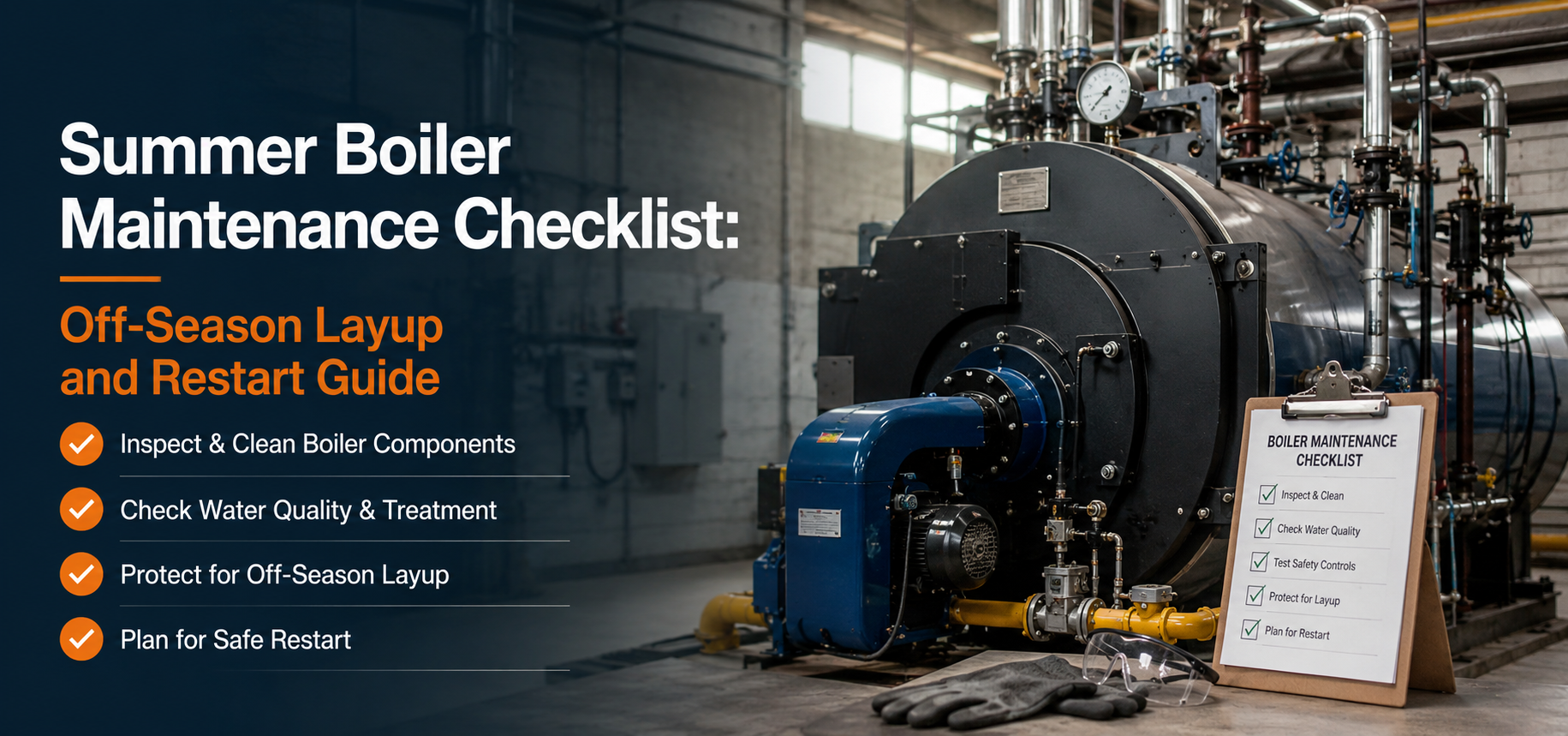
- Summer Boiler Layup Checklist: A Quick Guide
- Why Boilers Fail After Summer Shutdown
- Common Mistakes Facilities Make Before Bringing Boilers Back Online
- Partner with Control Specialties for Reliable Boiler Performance Year-Round
- Frequently Asked Questions (FAQs)
As temperatures rise and the heating season comes to an end, many facility managers turn their attention to other priorities. However, summer is one of the most important times to protect your boiler system. Without proper maintenance and monitoring of critical components such as back pressure regulators, an idle boiler can become vulnerable to corrosion, scale buildup, and mechanical deterioration that often go unnoticed until the next heating season.
Effective off-season boiler care follows four essential stages: Shutdown → Layup → Inspection → Restart.
While cleaning and inspections are important, the layup phase is often where facilities fall short. How well a boiler is preserved during months of inactivity can determine whether it starts up reliably in the fall or requires costly repairs.
Improper layup can lead to oxygen pitting, acidic condensate corrosion, scale deposits, and reduced heat transfer efficiency. A well-planned preservation strategy helps protect key boiler components, maintain system performance, and ensure a safer and more reliable restart when colder weather returns.
What is a Boiler Layup and Why Does It Matter?
Boiler layup is the process of protecting a boiler and its steam system during an extended shutdown period. Instead of simply turning the boiler off for the summer, facilities use specific preservation methods to prevent damage while the system remains idle.
Without proper layup, a boiler can begin deteriorating long before the next heating season arrives.
Common risks of an unprotected boiler include:
- Oxygen pitting and internal corrosion
- Acidic condensate attacking metal surfaces
- Scale and sediment buildup inside boiler tubes
- Deterioration of seals, gaskets, and fittings
- Reduced heat transfer efficiency and higher operating costs
Summer shutdowns are particularly risky because stagnant water and trapped moisture create ideal conditions for corrosion. Even a few months of inactivity can cause significant internal damage if water chemistry is not properly controlled.
A proper boiler layup program helps facilities:
- Prevent corrosion and scale formation
- Extend boiler and equipment life
- Protect steam distribution components
- Reduce unexpected repair costs
- Ensure a smoother and safer seasonal startup
Taking the right steps during the off-season helps preserve everything from the boiler vessel and piping to valves, steam traps, and condensate return equipment, reducing the likelihood of costly surprises when colder weather returns.
4 Critical Phases of Off-Season Boiler Maintenance
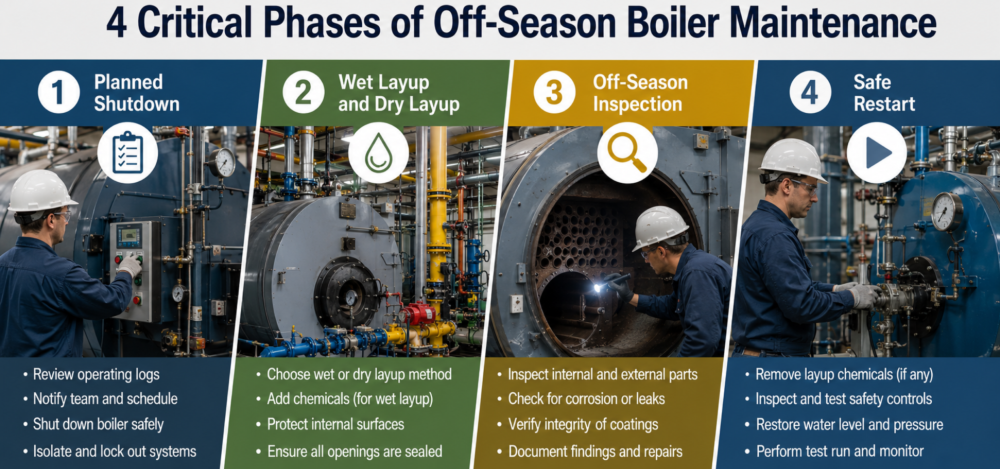
Effective boiler maintenance extends beyond the heating season. A structured approach to shutdown, layup, inspection, and restart helps prevent corrosion, reduce unexpected repairs, and protect long-term system performance.
Following these four critical phases can help ensure a safer, more reliable startup when heating demand returns.
Phase 1: Planned Shutdown - Building the Foundation for a Successful Layup
A successful boiler layup begins with a controlled and well-planned shutdown. Skipping critical steps during this phase can create conditions that accelerate corrosion, increase maintenance costs, and complicate startup when the heating season returns. Taking the time to properly assess, prepare, and isolate the system helps protect equipment throughout the off-season.
Step 1: Review System Performance and Operating Conditions
Before shutting down the boiler, establish a baseline by documenting key operating data, including boiler pressure, temperature, water chemistry, and overall system performance. This information provides a valuable reference point for future inspections and troubleshooting.
Pay close attention to the Honeywell Pressuretrol, ensuring the control is accurately maintaining the desired steam pressure range. Any calibration issues or abnormal cycling patterns should be addressed before the boiler is taken offline.
Facilities experiencing pressure instability during the previous heating season should prioritize inspection and recalibration of back pressure regulators before shutdown. Recording current setpoints and identifying potential maintenance needs now can help prevent unexpected issues during startup.
Step 2: Prepare the Boiler with Pre-Shutdown Water Treatment
The final days of operation provide an opportunity to strengthen corrosion protection before the boiler enters dormancy. Water treatment levels should be adjusted to minimize oxygen-related corrosion and preserve internal metal surfaces during the layup period.
Work with your water treatment provider to verify that oxygen scavenger levels, pH, and treatment residuals are within recommended ranges. Before shutdown, perform a blowdown to remove accumulated dissolved solids and apply the appropriate chemical treatment to help protect the boiler while it remains idle.
Step 3: Execute a Controlled Shutdown
Once inspections and water treatment are complete, follow a structured shutdown procedure to safely isolate the system:
- Allow the boiler to cool naturally after the final firing cycle
- Close steam supply valves to isolate the distribution network
- Disconnect the boiler from the condensate return system
- Apply lockout/tagout (LOTO) procedures to all isolation points
- Shut off and verify the fuel supply is secured
- Confirm all burner controls are in the OFF position
- Disconnect electrical power only after all systems have been safely shut down
A disciplined shutdown process reduces the risk of internal damage during storage and creates the ideal conditions for a successful boiler layup program.
Phase 2: Wet Layup vs. Dry Layup - Choosing the Right Preservation Method
Once the boiler has been safely shut down, the next step is selecting the appropriate layup strategy. The right choice depends on several factors, including the expected downtime, climate conditions, freeze risk, and the level of monitoring available during the off-season.
In general, wet layup is best suited for short-term shutdowns where regular monitoring is possible, while dry layup provides superior protection for boilers that will remain out of service for extended periods.
Wet Layup vs. Dry Layup: A Quick Comparison
| Factor | Wet Layup | Dry Layup |
|---|---|---|
| Duration | Short-term (under 30 days) | Long-term (30+ days) |
| Method | The boiler remains filled with treated water | The boiler is drained and dried completely |
| Freeze Risk | High | Low |
| Monitoring Requirements | Regular water chemistry checks | Periodic desiccant inspection |
| Startup Time | Faster | Longer |
| Best Applications | Backup boilers, mild climates, quick-return facilities | Long shutdowns, cold climates, and unattended facilities |
Wet Layup Procedure
Wet layup protects internal surfaces by keeping the boiler completely filled with chemically treated water. By eliminating air pockets, it reduces the risk of oxygen-related corrosion and helps maintain system readiness for a quicker startup.
Follow These Steps:
- Fill the boiler to eliminate air space above the water line.
- Add oxygen scavengers according to your water treatment program to maintain recommended residual levels.
- Adjust pH to the upper end of the acceptable operating range for the boiler.
- Isolate and drain the steam-operated condensate pump to prevent internal corrosion, seal damage, and component deterioration during the layup period.
- Monitor water chemistry every 7 - 10 days and replenish treatment chemicals as needed.
- Avoid wet layup in areas exposed to freezing temperatures unless the boiler room can be maintained above the minimum recommended temperature.
Best For:
Facilities expecting a relatively short shutdown period and capable of performing routine monitoring.
Dry Layup Procedure
Dry layup eliminates corrosion by removing water from the system and controlling internal moisture levels. Because no standing water remains, it's generally considered the preferred option for long-term shutdowns and facilities located in colder climates.
Follow These Steps:
- Drain the boiler completely, including low points, piping, and connected components.
- Open access ports and allow all internal surfaces to dry thoroughly.
- Place silica gel desiccant trays inside the boiler to absorb residual moisture.
- Seal all openings to prevent humid air from entering the vessel.
- For enhanced protection, use a dry nitrogen blanket to create an oxygen-free environment inside the boiler.
- Inspect desiccants monthly and replace them when moisture indicators show saturation.
Best For:
Facilities planning extended shutdowns, operating in cold climates, or being unable to perform frequent monitoring throughout the off-season.
Phase 3: Off-Season Inspection - The Summer Maintenance Checklist
The layup period provides a rare opportunity to inspect, test, and service critical boiler components without disrupting operations. Many failures that occur during the heating season can be traced back to issues that were present but undetected during the summer shutdown.
By working through each inspection area systematically, facilities can identify wear, corrosion, control issues, and safety concerns before they develop into costly repairs or unplanned downtime.
Fireside and Combustion System Inspection
The fireside is responsible for transferring heat from combustion gases to the boiler water. Even relatively small amounts of soot, scale, or refractory damage can reduce efficiency and increase fuel consumption.
Focus on the Following Areas:
- Clean all fireside heating surfaces. Soot and scale deposits can reduce heat transfer efficiency by up to 10% for every 1/8in of buildup.
- Inspect burner nozzles, ignition electrodes, and flame scanners for wear or contamination. Replace damaged components before startup.
- Examine refractory lining for cracks, spalling, or loose sections that could affect combustion performance.
- Clean flue gas passages and inspect the stack damper for proper operation.
- Test combustion controls and verify that all safety interlocks function correctly.
Waterside and Pressure Vessel Inspection
While fireside issues affect efficiency, waterside problems often threaten the long-term integrity of the boiler itself. Internal inspections help identify corrosion, scale accumulation, and pressure vessel deterioration before they become serious reliability concerns.
Inspection Priorities Include:
- Opening handhole and manhole covers for a thorough internal inspection.
- Photographing and documenting any corrosion, scale deposits, or unusual wear patterns.
- Inspecting tube sheets for erosion, cracking, or pitting.
- Checking waterside surfaces for oxygen pitting, which typically appears as small but deep pits surrounded by iron oxide deposits.
- Examine the sight glass assembly and replace any glass that is clouded, scratched, or difficult to read.
- Testing the low-water cutoff (LWCO). This critical safety device must reliably shut down the boiler before water levels fall below safe operating limits.
Safety and Control Valve Inspection
This is often the most critical portion of the summer maintenance program because many of these components directly protect personnel, equipment, and facility operations.
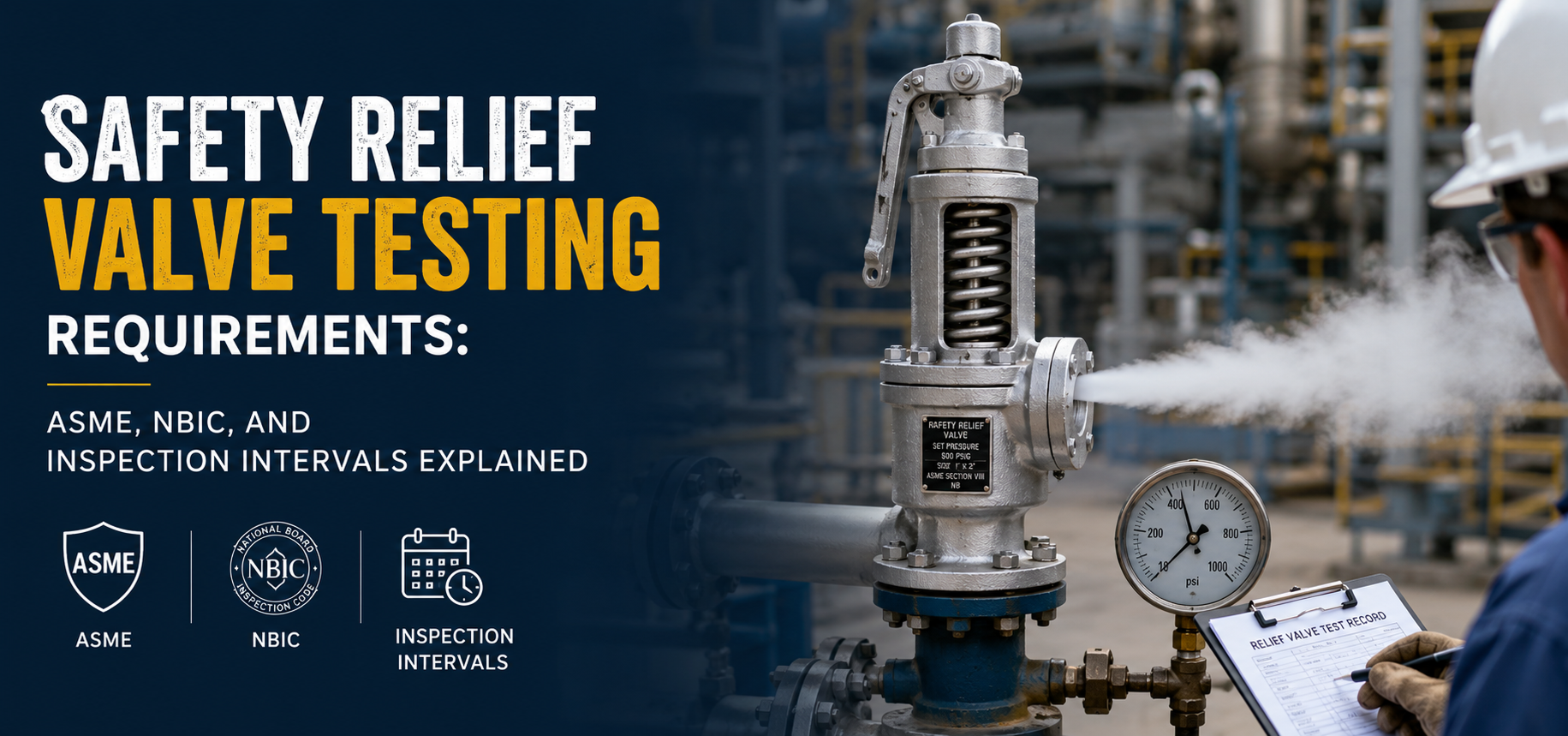
For detailed testing procedures and compliance guidance, refer to our Safety Valve Testing Requirements Guide.
Kunkle Relief Valve
The Kunkle Relief Valve serves as the boiler's final line of defense against overpressure conditions.
During inspection:
- Manually operate the test lever to verify free movement.
- Confirm the valve opens and reseats properly.
- Check seating surfaces for corrosion or wear.
- Replace valves that leak, fail to reseat, or show signs of damage.
Honeywell Pressuretrol
The Honeywell Pressuretrol controls boiler operating pressure and steam cycling.
Verify:
- Main pressure settings match design specifications.
- Differential settings are properly adjusted.
- Control operation is smooth and accurate.
- No calibration drift has occurred since the previous heating season.
Back Pressure Regulators
Back Pressure Regulators help maintain stable downstream pressure while supporting proper condensate drainage and equipment protection.
Maintenance should include:
- Disassembling and cleaning pilot assemblies.
- Inspecting main valve seats for erosion.
- Examining diaphragms for cracking, stiffness, or wear.
- Confirming setpoints remain properly documented and calibrated.
Temperature Control Valves
Temperature Control Valves regulate steam or hot water flow to maintain process temperatures.
Inspect:
- Valve seats for erosion or leakage.
- Actuator movement and responsiveness.
- Signal communication between controls and actuators.
Worn components often result in unstable temperature control, excessive energy consumption, and unnecessary boiler cycling.
Fisher Control Valves
Fisher Control Valves provide precise steam flow regulation throughout many industrial systems.
Recommended inspection tasks include:
- Checking packing glands for leakage.
- Examining valve plugs and seats for wire drawing or erosion.
- Testing actuator diaphragm integrity.
- Verifying smooth valve response throughout the operating range.
Any valve exhibiting excessive leakage or sluggish operation should be rebuilt or replaced before startup. For more details, visit Fisher Control Valves Guide.
Condensate System Inspection
The condensate return system is one of the most frequently overlooked areas of a steam system, yet it has a direct impact on efficiency, water usage, and boiler longevity.
For additional diagnostics, see our Steam Trap Troubleshooting Guide.
Steam Trap Testing
Every Steam Trap should be tested during the off-season.
Failed-open traps:
- Waste live steam
- Increase energy costs
Failed-closed traps:
- Cause waterlogging
- Create water hammer conditions
- Reduce system performance
Use ultrasonic testing equipment or infrared temperature analysis to verify proper operation.
Steam-Operated Condensate Pump
The Steam-Operated Condensate Pump plays a critical role in returning condensate to the boiler feedwater system.
During inspection:
- Disassemble the pump head.
- Inspect valves and seats for wear.
- Verify proper operation of the steam trap assembly controlling pump cycling.
- Replace worn internal components.
A failed condensate pump often forces the system to rely on additional makeup water, increasing treatment costs and corrosion risk.
Inspect Return Equipment and Piping
Additional maintenance tasks should include:
- Flushing condensate return lines to remove sludge and scale deposits
- Inspecting condensate receivers for waterline corrosion
- Checking return piping for corrosion, sagging, improper pitch, or conditions that may contribute to water hammer
Rotating Equipment and Mechanical Inspection
Mechanical equipment experiences continuous wear throughout the heating season. Summer inspections provide the best opportunity to identify developing failures before they affect production or facility operations.
Rotary Joints
Rotary Joints are commonly used on rotating steam-heated equipment such as dryers, heated rolls, and cylinders.
Maintenance activities should include:
- Disassembling the rotary joint
- Inspecting seal faces and slipper rings
- Measuring clearances against manufacturer specifications
- Replacing worn carbon rings and spring assemblies
Because rotary joints operate continuously during production, even minor wear can quickly develop into major failures.
Goulds Pumps
Goulds Pumps are widely used throughout feedwater and condensate return systems and should receive a comprehensive inspection during layup.
Evaluate:
- Mechanical seal condition
- Impeller erosion or cavitation damage
- Shaft alignment
- Bearing lubrication and wear
Misalignment and seal failures are among the most common causes of unexpected pump outages during the heating season.
Complete General Mechanical Checks
Before startup, also:
- Lubricate valve stems
- Inspect and replace worn packing materials
- Check expansion joints and flexible connectors
- Verify pipe guides remain properly aligned and secured
Phase 4: Restart Procedures - Bringing the Boiler Back Online Safely
A successful layup program is only complete when the boiler is returned to service safely and efficiently. While shutdown and preservation help protect the system during the off-season, the startup process introduces its own risks. In fact, more boiler incidents occur during startup than during normal operation due to thermal shock, equipment failures, control malfunctions, and overlooked maintenance issues.
Following a structured restart procedure helps identify potential problems before they escalate into costly downtime, safety hazards, or equipment damage.
Pre-Startup Checklist
Before firing the boiler, perform a comprehensive inspection to verify that all maintenance work has been completed and the system is ready for operation.
Verify Boiler and System Readiness
- Remove all lockout/tagout (LOTO) devices and confirm authorization through maintenance records.
- If dry layup was used, slowly refill the boiler and inspect all repaired or serviced connections for leaks.
- Remove any desiccant trays or moisture-control materials installed during storage.
- Confirm that all access covers, manways, handholes, and inspection ports have been properly reinstalled and secured.
Verify Water Quality and Safety Devices
Before introducing heat, ensure water chemistry is within recommended operating limits.
Check:
- pH levels
- Alkalinity
- Oxygen scavenger residuals
- Feedwater quality parameters
In addition, inspect and test critical safety controls:
- Verify the Kunkle Relief Valve is properly seated, unobstructed, and ready to operate.
- Confirm the Honeywell Pressuretrol settings match the system's design operating requirements.
- Test the low-water cutoff (LWCO) by gradually lowering the water level and confirming automatic burner shutdown.
Steam System Components
The steam distribution system should be evaluated before introducing pressure.
Key checks include:
- Slowly open steam supply valves to minimize thermal shock.
- Verify all Back Pressure Regulators are properly adjusted and responding correctly.
- Confirm the Steam-Operated Condensate Pump cycles properly and is capable of returning condensate to the feedwater system.
- Inspect steam traps, isolation valves, and condensate return equipment for proper operation.
Completing these checks before firing helps prevent startup failures and reduces the likelihood of emergency shutdowns during commissioning.
Controlled Startup Procedure
Once all pre-startup inspections are complete, bring the boiler online gradually. Rapid heating can place excessive stress on pressure vessels, piping, valves, and refractory components that have been idle for months.
Start on Low Fire
Begin with a low-fire startup and allow the boiler to warm gradually.
Best practices include:
- Operating on low fire for the first startup cycle
- Allowing 30 - 60 minutes for gradual temperature stabilization
- Avoiding rapid pressure increases that can create thermal stress
This controlled warmup period helps protect boiler components and reduces the risk of expansion-related damage.
Monitor System Performance Closely
As steam pressure begins to build, closely monitor system operation.
Watch for:
- Smooth and steady pressure increases
- Unusual noises, vibration, or water hammer
- Leaks around repaired components
- Proper response from control devices and safety equipment
Particular attention should be paid to steam traps during initial warmup, as newly filled piping systems often discharge significant volumes of condensate.
Verify Efficiency and Document Performance
After the system reaches normal operating conditions:
- Check flue gas temperature using a combustion analyzer.
- Measure CO₂ and O₂ levels to verify combustion efficiency.
- Inspect all repaired or replaced components during the first hour of operation.
- Record startup readings, control settings, and inspection results in the boiler log.
Maintaining detailed startup records supports regulatory compliance, simplifies future troubleshooting, and provides valuable baseline data for the next maintenance cycle.
Summer Boiler Layup Checklist: A Quick Guide
Use this at-a-glance checklist to verify that every critical phase of your boiler shutdown, layup, inspection, and restart program has been completed before the next heating season.
| Phase | What to Do | Key Components to Check |
|---|---|---|
| 1. Planned Shutdown | Prepare the boiler for extended inactivity by documenting operating conditions, optimizing water treatment, and safely isolating the system. | Honeywell Pressuretrol, Back Pressure Regulators, Fuel Shutoff Controls, Condensate Return System, LockOut/TagOut (LOTO) Devices |
| 2. Boiler Layup | Select an appropriate preservation method based on downtime duration, climate conditions, and monitoring capabilities. | Wet Layup Water Chemistry, Dry Layup Desiccants, Nitrogen Blanket Systems, Steam-Operated Condensate Pump |
| 3. Off-Season Inspection | Perform comprehensive inspections, maintenance, and repairs while the system is safely offline. | Kunkle Relief Valve, Fisher Control Valves, Temperature Control Valves, Back Pressure Regulators, Rotary Joints, Goulds Pumps, Steam Traps, Condensate Equipment |
| 4. Safe Restart | Verify System Readiness, Test Safety Devices, Restore Water Chemistry, Bring the Boiler Online Gradually. | Honeywell Pressuretrol, Kunkle Relief Valve, Low-Water Cutoff (LWCO), Back Pressure Regulators, Steam-Operated Condensate Pump, Steam Distribution System |
Before the Heating Season Returns, Confirm that You Have:
- Completed a controlled shutdown and lockout procedure
- Implemented the correct wet or dry layup strategy
- Inspected and serviced all critical safety and control devices
- Tested steam traps, condensate equipment, and return systems
- Verified water chemistry and safety controls before startup
- Brought the boiler online gradually using a controlled startup procedure
Following this four-phase process helps reduce corrosion, improve reliability, extend equipment life, and minimize the risk of costly startup failures when heating demand returns.
Why Boilers Fail After Summer Shutdown
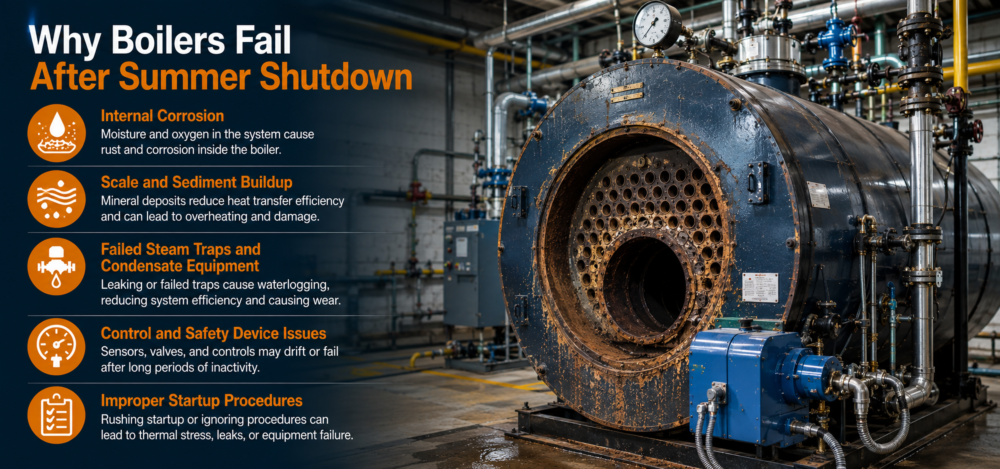
Many boiler failures that occur at the start of the heating season can be traced back to improper off-season maintenance. While a boiler may appear to be inactive during the summer, corrosion, moisture buildup, and equipment deterioration often continue behind the scenes.
Without a structured shutdown and layup program, minor issues can develop into major operational problems by the time the system is needed again.
Common causes of post-shutdown boiler failures include:
- Internal Corrosion: Dissolved oxygen in untreated water attacks boiler tubes, drums, and piping during extended periods of inactivity.
- Scale and Sediment Buildup: Deposits left inside the boiler reduce heat transfer efficiency and can lead to overheating.
- Failed Steam Traps and Condensate Equipment: Components that are not inspected during layup may malfunction during startup, causing water hammer and system inefficiencies.
- Control and Safety Device Issues: Pressure controls, relief valves, and low-water cutoffs can drift out of calibration or develop faults while idle.
- Improper Startup Procedures: Bringing a cold boiler online too quickly can cause thermal shock, leaks, and stress-related damage.
The good news is that most of these failures are preventable. A comprehensive shutdown, layup, inspection, and restart program helps identify potential issues early, reducing repair costs and improving system reliability when the heating season returns.
Common Mistakes Facilities Make Before Bringing Boilers Back Online
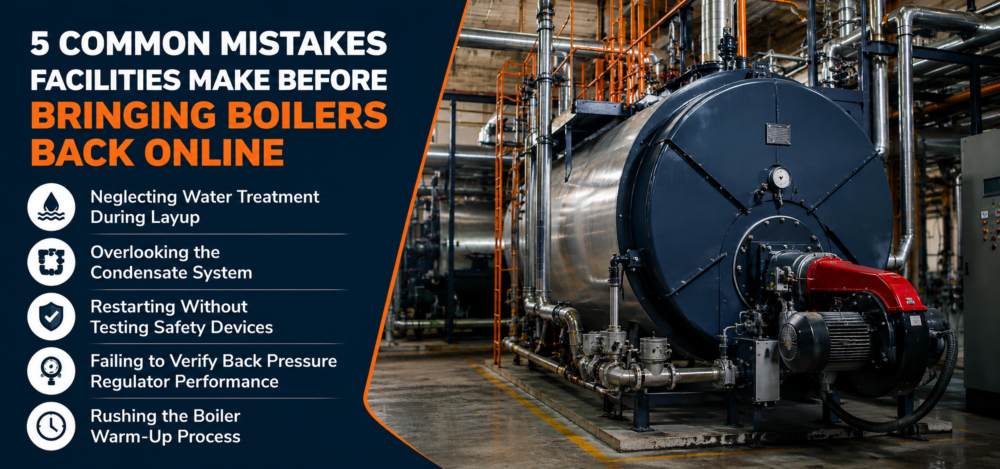
Even with a well-planned shutdown and layup process, many facilities encounter startup issues due to avoidable mistakes. These oversights can lead to corrosion, equipment damage, safety hazards, and unplanned downtime. Understanding the most common errors can help ensure a safer and more efficient return to operation.
Mistake #1: Neglecting Water Treatment During Layup
One of the most common and costly mistakes is leaving untreated water inside the boiler during shutdown. Dissolved oxygen and contaminants quickly begin attacking internal metal surfaces, accelerating corrosion and causing pitting damage.
Proper water treatment and oxygen scavenging measures are essential to preserve the boiler's integrity throughout the off-season.
Mistake #2: Overlooking the Condensate System
Many facilities focus solely on the boiler itself and forget to protect the condensate return system. Steam-operated condensate pumps, receiver tanks, and return piping often retain standing water during extended shutdowns.
As oxygen concentrates in this stagnant water, corrosion can rapidly develop. Draining condensate receivers and protecting pump internals should be a standard part of every layup procedure.
Mistake #3: Restarting Without Testing Safety Devices
Safety controls that have remained inactive for months should never be assumed operational. Before startup, all critical safety components, including relief valves, low-water cutoffs, pressure controls, and alarms, must be inspected and tested.
A malfunctioning relief valve that fails to open at its designated set pressure can create a serious safety hazard and place personnel and equipment at significant risk.
Mistake #4: Failing to Verify Back Pressure Regulator Performance
Back pressure regulators play a vital role in maintaining stable system operation, yet they are frequently overlooked during startup inspections. A regulator stuck open can cause condensate to drain too quickly, resulting in boiler short-cycling and increased fuel consumption.
Conversely, a regulator stuck closed can create excessive downstream pressure, affecting system efficiency and equipment reliability. Proper testing and adjustment before startup help prevent these issues.
Mistake #5: Rushing the Boiler Warm-Up Process
Bringing a cold boiler online too quickly is a leading cause of thermal stress-related failures. After months of inactivity, the boiler, steam piping, valves, and control equipment must be warmed gradually to allow components to expand uniformly.
Rapid firing can create thermal shock, leading to cracked refractory, damaged boiler tubes, strained piping supports, and premature equipment wear. A controlled startup process significantly reduces these risks and helps extend system lifespan.
Partner with Control Specialties for Reliable Boiler Performance Year-Round
A successful boiler layup program requires more than simply shutting equipment down. From planned shutdown and preservation to inspection and safe restart, every phase plays a critical role in preventing corrosion, improving reliability, and extending equipment life.
Being a trusted industrial equipment supplier, Control Specialties has helped facilities optimize steam and process systems through:
- Steam system audits and troubleshooting
- Boiler room controls and instrumentation
- Pressure, temperature, and flow control solutions
- Valve, pump, and condensate system expertise
- Preventive maintenance and system optimization support
Whether you're preparing for summer layup or planning a seasonal startup, our team can help you identify risks, improve system performance, and reduce costly downtime. Contact our experts today to schedule a consultation and discuss the right solutions for your facility.
Frequently Asked Questions (FAQs)
How often should a boiler be inspected during summer layup?
The inspection frequency depends on the layup method. Wet layup systems typically require water chemistry checks every 7–10 days, while dry layup systems should have desiccants inspected monthly. Regular monitoring helps prevent corrosion, equipment deterioration, and startup issues.
Is wet layup or dry layup better for my boiler system?
Neither method is universally better. Wet layup is generally recommended for short-term shutdowns and facilities that can perform routine monitoring, while dry layup provides superior protection during extended downtime, especially in cold climates where freezing is a concern.
What are the most critical components to inspect before restarting a boiler?
Before startup, facilities should inspect and test the Honeywell Pressuretrol, Kunkle Relief Valve, back pressure regulators, low-water cutoff, steam traps, and the steam-operated condensate pump. Verifying the proper operation of these components helps ensure a safe and reliable startup.
What are the risks of skipping boiler layup during the summer?
Without proper layup, boilers can experience oxygen corrosion, scale buildup, acidic condensate damage, and deterioration of critical system components. These issues often remain hidden until startup, resulting in reduced efficiency, costly repairs, and unexpected downtime.
How can Control Specialties help with boiler layup and seasonal maintenance?
Control Specialties provides expert support for steam and process systems, including boiler controls, pressure regulation, condensate management, valve maintenance, and system troubleshooting. Our team can help develop a proactive maintenance strategy that improves reliability, efficiency, and long-term equipment performance.
Why do boiler startups fail after long shutdowns?
Boiler startups often fail after long shutdowns because of corrosion, scale buildup, deteriorated seals, faulty controls, poor water chemistry, or neglected safety devices. Improper layup and rushed startup procedures can also lead to leaks, thermal shock, equipment damage, and unexpected system failures.