Table of contents
- The Role of Steam Traps in System Efficiency
- Common Warning Signs: How to Know if a Steam Trap is Failing
- Steam Trap Failure Symptoms and the Likely Causes
- How to Test a Steam Trap: 3 Proven Methods
- Repair vs. Replace Steam Trap: How to Make the Right Decision
- The Financial Impact of Failed Steam Traps
- Steam Trap Performance in the Broader System Context
- How to Build a Proactive Steam Trap Maintenance Program
- When to Call a Steam System Specialist
- Work with Control Specialties to Improve Steam System Reliability
- Frequently Asked Questions (FAQs)
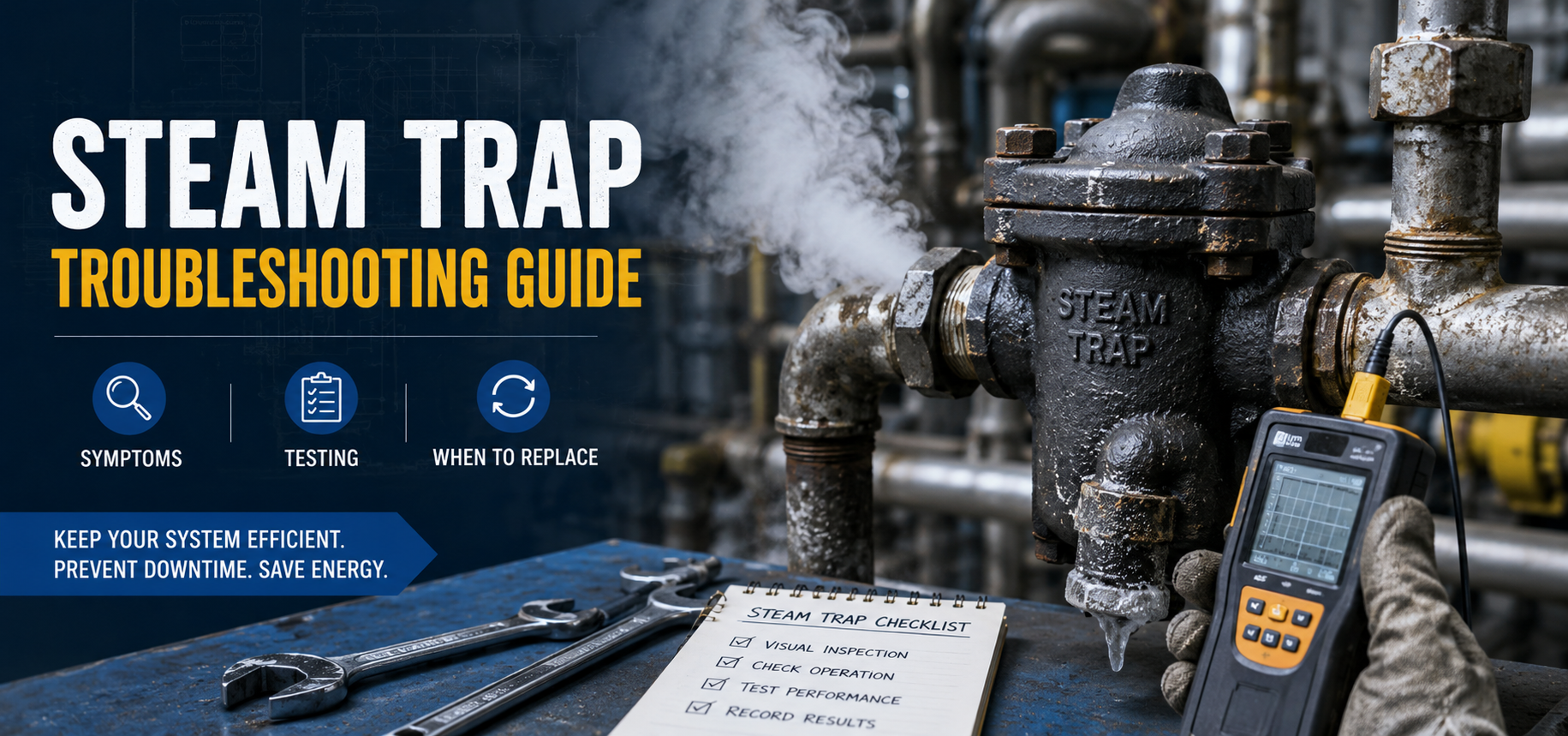
Steam traps are small components with a major impact on steam system efficiency, equipment protection, and operating costs. When they fail, facilities can experience live steam loss, water hammer, poor heat transfer, condensate backup, and premature equipment damage.
When functioning properly, they improve energy efficiency, protect equipment, and support reliable process performance. When they fail, the consequences can include energy waste, water hammer, production disruptions, and premature equipment damage.
Failed steam traps can also affect connected equipment, such as steam pumps, condensate recovery systems, and heat exchangers, while creating pressure control challenges that may affect a back pressure valve and overall system stability.
This blog is intended for facility managers and maintenance teams facing steam system issues. We'll cover how to identify failure symptoms, diagnose root causes, test steam traps effectively, and determine whether repair or replacement is the right solution.
The Role of Steam Traps in System Efficiency
Steam traps play a vital role in maintaining the efficiency, safety, and reliability of industrial steam systems. While they are relatively small components, their performance directly impacts energy consumption, heat transfer, condensate management, and equipment protection. Understanding their function is the first step toward identifying and resolving system issues.
Steam traps are designed to:
- Remove condensate formed as steam transfers heat
- Vent air and other non-condensable gases
- Prevent the loss of valuable live steam
- Maintain efficient heat transfer and system performance
A properly functioning steam trap works in coordination with other critical steam system components, including a steam pump, condensate return equipment, and a back pressure valve, to ensure reliable steam distribution and condensate recovery.
When a steam trap fails, the impact can quickly spread throughout the system:
- Condensate accumulates in steam lines and equipment
- Heat transfer efficiency decreases
- Water hammer risks increase
- Process temperatures become inconsistent
- Energy consumption rises
These conditions can also affect downstream controls, forcing components such as Temperature Control Valves and Fisher Control Valves to compensate for unstable operating conditions. Over time, this added strain can reduce system performance, increase maintenance requirements, and shorten equipment life.
Common Warning Signs: How to Know if a Steam Trap is Failing
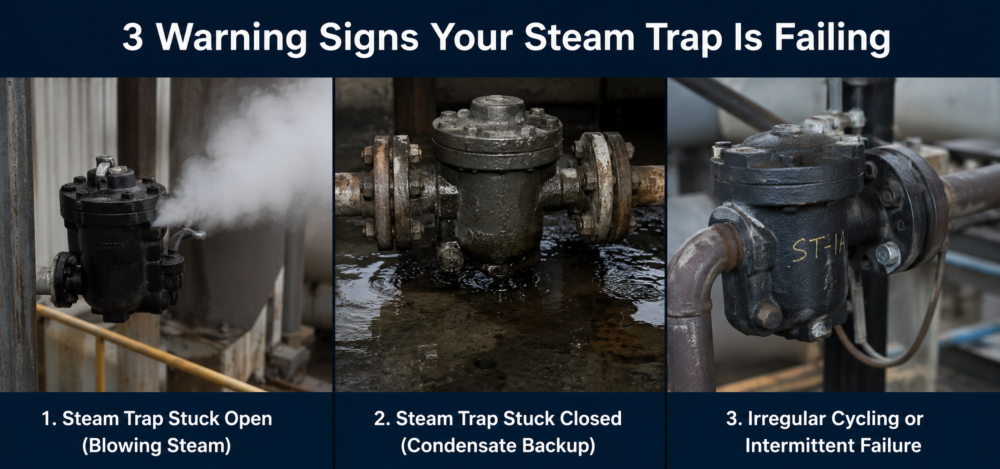
Steam trap failures rarely occur without warning. In most cases, the system exhibits noticeable symptoms long before a trap completely fails. Recognizing these early indicators can help maintenance teams prevent energy losses, equipment damage, and costly downtime.
Signs of a Blowing-Through (Failed-Open) Steam Trap
When a steam trap fails in the open position, live steam continuously escapes into the condensate return system, resulting in significant energy waste.
- Visible or Audible Steam Discharge: Continuous steam flow from condensate return lines often indicates that live steam is bypassing the trap.
- Unusually Hot Condensate Return Lines: Excessive pipe temperatures downstream of the trap may signal steam leakage where only condensate should be present.
- Increased Energy Consumption: A failed-open trap forces the boiler to generate additional steam, increasing fuel and operating costs.
- High Condensate Return System Back Pressure: Excess steam entering the return network can create pressure buildup that affects a back pressure valve and condensate handling equipment.
- Flash Steam at Receivers or Vents: Large volumes of flash steam around condensate receivers often indicate excessive live steam loss through failed traps.
Indications of a Stuck-Closed (Failed-Closed) Steam Trap
A closed trap prevents condensate from leaving the system, causing water accumulation and reduced heating performance.
- Water Hammer: Loud banging or knocking sounds occur when trapped condensate is accelerated by steam through piping.
- Reduced Heating Capacity: Condensate buildup limits heat transfer, causing equipment to heat slowly or unevenly.
- Wet Steam Conditions: Excess moisture carried with steam reduces process efficiency and can damage downstream equipment.
- Accelerated Corrosion and Erosion: Standing condensate promotes internal corrosion and can shorten equipment service life.
- Steam Pressure Fluctuations: Blocked condensate flow can create unstable operating conditions that impact Honeywell Pressuretrol settings and pressure control performance.
Signals of a Cycling or Intermittently Failing Steam Trap
Some steam traps don't fail but operate inconsistently, making troubleshooting more challenging.
- Inconsistent Heat Output: Heating performance may change throughout the day due to unpredictable trap cycling.
- Temperature Swings at Process Equipment: Irregular condensate removal can lead to unstable process temperatures and reduced product quality.
- Visible Condensate Pooling: Water accumulation near steam equipment often indicates intermittent drainage problems.
- Unexpected Control Trips: Pressure and temperature controls may trigger alarms or shutdowns when system conditions become unstable.
Identifying these warning signs early allows maintenance teams to isolate failing traps before they affect system efficiency, equipment reliability, and overall plant performance.
Steam Trap Failure Symptoms and the Likely Causes
Different steam trap failures produce different operating symptoms. Understanding the relationship between what you observe in the field and the underlying failure mode can help maintenance teams diagnose problems faster and prioritize corrective action before they impact production or equipment reliability.
| Symptom | Likely Failure Mode | Common Root Cause | Urgency |
|---|---|---|---|
| Steam is escaping continuously at the discharge | Failed-open trap | Worn valve seat, damaged internals, or corrosion | High - Immediate energy loss |
| Water hammer in steam lines | Failed-closed or blocked trap | Scale buildup, debris, or mechanical failure | High - Risk of equipment damage |
| Inconsistent heat output | Cycling failure or partial blockage | Oversized trap, dirt accumulation, or improper operation | Medium - Reduced process efficiency |
| High condensate return temperature | Failed-open trap passing live steam | Seat erosion, wear, or corrosion | High - Increased energy costs and system stress |
| Corrosion in condensate return lines | Failed-closed trap causing flooding | Poor venting and carbon dioxide accumulation | Medium - Long-term asset degradation |
| Rotating joint operating at elevated temperatures | Failed-open, undersized, or improperly selected trap | Inadequate condensate removal from rotating equipment | High - Potential equipment failure |
Important:
Equipment that relies on a rotating joint, such as paper machine dryer cans and rotary cylinders, is particularly sensitive to condensate accumulation. Even a short-term steam trap failure can disrupt condensate removal, reduce heat transfer efficiency, cause siphon collapse, and lead to costly equipment damage or production losses.
Use this table as a quick-reference guide during inspections, but always follow up with proper testing to confirm the actual failure mode before replacing a steam trap.
How to Test a Steam Trap: 3 Proven Methods
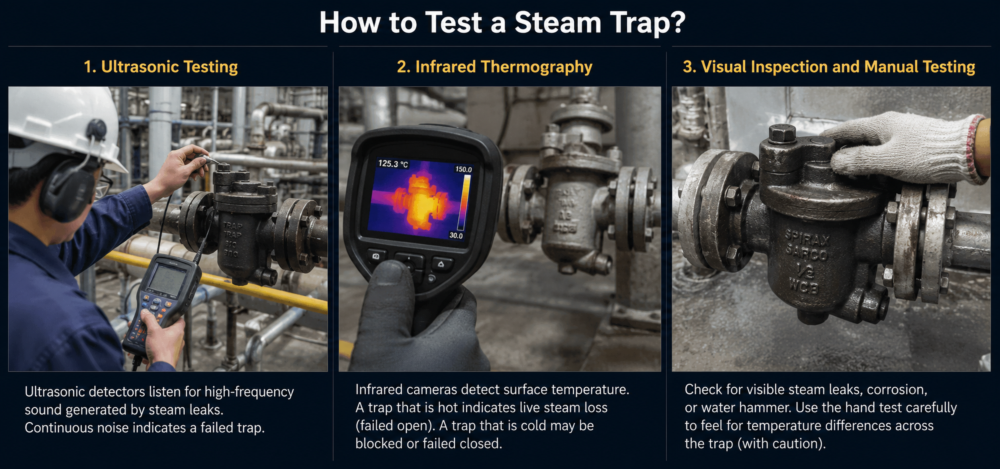
Identifying symptoms is only the first step. To accurately determine whether a steam trap is operating correctly, maintenance teams should perform targeted testing. Using a combination of testing methods provides the most reliable assessment and helps avoid unnecessary replacements.
1. Ultrasonic Testing
Ultrasonic testing is one of the most effective and widely used methods for evaluating steam trap performance. Specialized detectors capture high-frequency sound waves generated by steam and condensate flowing through the trap.
What the Results Mean
- Healthy Trap: Intermittent cycling sounds as condensate is discharged
- Failed-Open Trap: Continuous high-frequency noise from live steam leakage
- Failed-Closed Trap: Little to no sound due to restricted flow
Key Benefits
- Non-invasive testing method
- Performed while the system remains online
- Ideal for surveying large numbers of steam traps
- Effective across a wide range of operating conditions
2. Infrared Thermography
Infrared (IR) thermography uses thermal imaging cameras to measure temperature differences across the steam trap. These temperature patterns can reveal whether steam or condensate is flowing correctly.
What the Results Mean
- Healthy Trap: Normal temperature differential between inlet and outlet
- Failed-Open Trap: Similar temperatures on both sides, indicating steam blow-through
- Failed-Closed Trap: Hot inlet with a significantly cooler outlet
Best Practices
- Test only after the system reaches stable operating conditions
- Compare readings against known baseline temperatures
- Maintain inspection records to track performance trends over time
3. Visual Inspection and Manual Testing
For steam traps equipped with test valves, direct observation remains a valuable diagnostic method. Briefly opening the test valve allows technicians to evaluate the discharge condition.
What the Results Mean
- Pure Steam Discharge: Trap likely failed open
- Condensate with Intermittent Steam: Trap operating normally
- No Discharge: Trap may be failed closed, or the line may be blocked
Important Consideration:
To ensure accurate results, verify that upstream industrial control valves and pressure controls are operating normally and that the system is at its intended operating pressure.
No single testing method provides a complete picture of steam trap health. Combining ultrasonic analysis, thermal imaging, and visual inspection allows maintenance teams to confirm failure modes with greater confidence and make informed repair or replacement decisions.
Repair vs. Replace Steam Trap: How to Make the Right Decision
When a steam trap fails, the goal is not simply to restore operation but to choose the most cost-effective and reliable long-term solution. While some failures can be resolved with a repair kit, others indicate that full replacement is the better investment.
Evaluating the trap's condition, repair history, and application requirements can help determine the right course of action.
Quick Comparison: Steam Trap Repair vs. Replacement
| Factor | Repair the Steam Trap | Replace the Steam Trap |
|---|---|---|
| Trap Body Condition | The body is structurally sound with no corrosion or damage | The body shows corrosion, erosion, cracking, or physical damage |
| Failure Type | Limited to replaceable internals such as seats, floats, or buckets | Multiple components are worn, or the trap has reached the end of its life |
| Cost Consideration | Repair kit and labor costs are significantly lower than replacement costs | Repair costs approach or exceed replacement costs |
| Reliability | Suitable for isolated failures | Better option for recurring or chronic failures |
| Application Suitability | The existing trap is correctly sized and specified | Trap is undersized, oversized, or no longer suited to operating conditions |
| Long-Term Performance | Extends the service life of an otherwise healthy trap | Provides improved efficiency and reliability with newer designs |
Choose Steam Trap Repair When...
Repair is often the preferred option when the steam trap's main body remains in good condition, and the failure is limited to serviceable internal components.
- The trap body is free from corrosion, cracks, and erosion.
- Only internal parts, such as valve seats, floats, or buckets, require replacement.
- The trap is a large-body or premium unit where repair kits offer significant cost savings.
- The existing trap is properly sized for the application and condensate load.
- The trap has a strong maintenance history with no recurring failures.
Choose Steam Trap Replacement When...
Replacement is typically the better choice when reliability, efficiency, or equipment condition is in question.
- The trap body shows signs of deterioration or mechanical damage.
- The same trap has required multiple repairs within a short period or time.
- Process conditions have changed, and the existing trap is no longer properly sized.
- A newer design can deliver better energy efficiency and lower maintenance costs.
- Repair expenses and downtime are approaching the cost of a new unit.
A steam trap does not operate in isolation. When replacing a trap, verify compatibility with the surrounding condensate return infrastructure, including the steam pump, condensate receivers, and back pressure valve arrangement. Improper sizing or mismatched system components can lead to condensate backup, increased back pressure, and premature failure of the replacement trap.
The most effective decision balances immediate repair costs against long-term reliability, energy savings, and maintenance requirements. In many cases, replacing an aging or repeatedly failing steam trap can provide a lower total cost of ownership than continued repairs.
The Financial Impact of Failed Steam Traps
A failed steam trap is more than a maintenance issue; it's a direct drain on operating profitability. Because steam systems often contain dozens or even hundreds of traps, a small percentage of failures can translate into significant energy losses, increased maintenance costs, and reduced equipment reliability.
Direct Energy Losses
When a steam trap fails open, valuable live steam escapes into the condensate return system instead of being used in the process.
- A single failed-open trap operating at 100 psig can waste 15 - 60lbs of steam per hour, depending on trap size and operating conditions.
- At typical industrial steam production costs, this can result in $2,000 to $10,000 in annual energy losses per trap.
- In facilities with hundreds of steam traps, even a modest failure rate can create tens or hundreds of thousands of dollars in avoidable utility expenses.
Hidden Costs Beyond Energy Waste
The financial impact extends well beyond the boiler room. Failed steam traps can create operating conditions that affect the entire steam and condensate system.
Equipment Damage
Failed-closed traps increase the risk of water hammer, which can damage piping, heat exchangers, and a rotating joint used in dryers and rotating equipment.
Reduced Process Efficiency
Wet steam reduces heat transfer performance, causing longer process times and inconsistent product quality.
Increased Maintenance Costs
Condensate flooding, corrosion, and excessive system back pressure can accelerate wear on pumps, piping, valves, and other critical equipment.
Unplanned Downtime
Steam system failures often lead to production interruptions, emergency repairs, and higher labor costs.
The Value of a Proactive Inspection Program
Regular steam trap inspections are one of the highest-return maintenance activities available in industrial steam systems. A structured program that combines ultrasonic testing, thermographic surveys, and routine maintenance can help facilities:
- Reduce steam losses and energy costs
- Identify failures before equipment damage occurs
- Improve system reliability and process consistency
- Extend the life of steam system assets
- Lower overall maintenance spending
For many facilities, the savings generated by identifying and correcting failed steam traps can offset inspection program costs within months, making steam trap management a practical and measurable energy-efficiency initiative.
Steam Trap Performance in the Broader System Context
A steam trap does not operate independently. Its performance is closely tied to the condition of the surrounding steam and condensate system. As a result, symptoms that appear to indicate steam trap failure may actually originate elsewhere.
Effective troubleshooting requires evaluating the trap alongside other critical system components.
Pressure Management
Steam traps rely on sufficient differential pressure to discharge condensate effectively. Excessive back pressure in the condensate return system can reduce trap capacity and lead to condensate backup.
What to Check
- Back pressure valve settings and operation
- Condensate return line pressure
- Signs of condensate flooding or slow drainage
Even a properly functioning steam trap can become waterlogged if the return system back pressure exceeds design conditions.
Boiler and Pressure Controls
Steam traps are designed to operate within specific pressure ranges. Significant pressure fluctuations can affect trap cycling and condensate removal performance.
What to Check
- Honeywell Pressuretrol settings and calibration
- Boiler operating pressure stability
- Pressure differentials across the trap
Before identifying a trap as failed, verify that the steam system is operating within its intended pressure range.
Condensate Return Equipment
Condensate handling problems often mimic steam trap failures. When condensate cannot be removed efficiently, traps may appear flooded even though they're functioning properly.
What to Check
- Steam pump operation and cycling
- Condensate receiver levels
- Receiver venting and return line restrictions
Addressing condensate return issues first can prevent unnecessary trap replacements and improve overall system performance.
Control Valve Performance
Steam traps are only one part of the steam control process. Problems upstream can create operating conditions that resemble trap failures.
What to Check
- Leakage through Temperature Control Valves
- Seat wear or improper operation of Fisher Control Valves
- Excess steam flow to heat exchangers and process equipment
A leaking control valve can overload a downstream trap, making a healthy trap appear defective.
Rotating Equipment Applications
Steam traps serving rotating equipment operate under particularly demanding conditions. Consistent condensate removal is essential to maintain heat transfer and equipment reliability.
What to Check
- Condensate removal rates
- Operating temperatures at the rotating joint
- Signs of condensate accumulation or uneven heating
Applications such as dryer cans, corrugators, and calendar rolls should be treated as high-priority inspection points because even minor trap performance issues can quickly lead to production losses and equipment damage.
When troubleshooting steam traps, the goal is to identify the true source of the problem, not simply replace the component showing symptoms. Evaluating pressure controls, condensate return equipment, control valves, and rotating equipment alongside the steam trap leads to faster diagnosis, more effective repairs, and improved system reliability.
How to Build a Proactive Steam Trap Maintenance Program
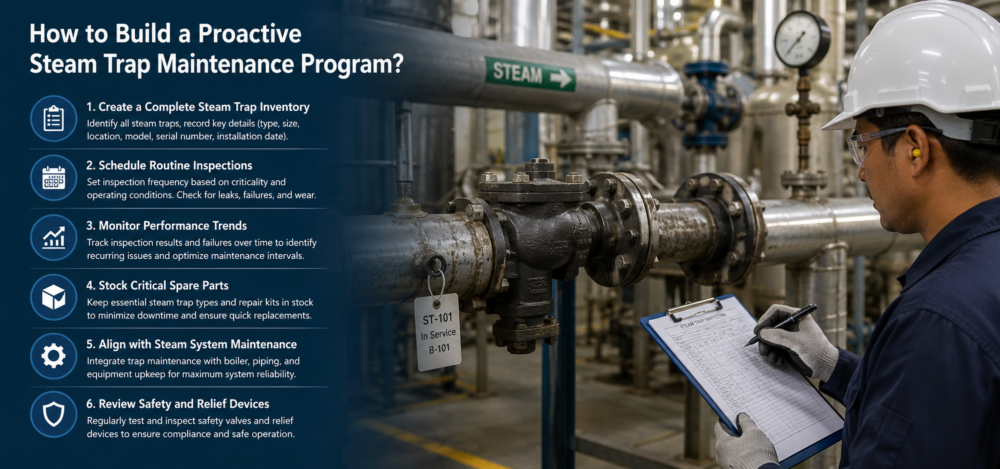
Waiting for a steam trap to fail before taking action is an expensive strategy. A proactive maintenance program helps facilities reduce energy losses, prevent unexpected downtime, and extend the life of steam system equipment.
In many industrial plants, a well-managed inspection program can keep steam trap failure rates below 5% while improving overall system efficiency.
A successful steam trap management program should include the following elements:
Maintain a Complete Steam Trap Inventory
Create and regularly update a database of every steam trap in the facility.
Include:
- Trap type and model
- Operating pressure
- Condensate load
- Installation location
- Inspection and maintenance history
A detailed inventory provides the foundation for performance tracking and replacement planning.
Establish Routine Inspection Intervals
Regular testing helps identify deteriorating traps before they become costly failures.
Recommended Frequency
- Annual surveys for general applications
- Quarterly inspections for critical processes
- More frequent monitoring for high-value assets and production-critical systems
Applications involving turbines, dryers, and rotating joint assemblies should receive priority attention.
Track Results and Analyze Trends
Inspection data becomes significantly more valuable when it's tracked over time.
Best Practices
- Assign a unique ID to each trap
- Record testing results after every survey
- Monitor recurring issues and failure patterns
- Prioritize traps showing progressive deterioration
Trend analysis allows maintenance teams to replace traps before they fail and disrupt operations.
Maintain Critical Spare Parts Inventory
Keeping commonly used replacement parts in stock can significantly reduce repair times.
Recommended Inventory
- Internal repair kits
- Gaskets and seals
- Replacement traps for critical applications
- Components for frequently used trap models
This approach minimizes downtime and improves maintenance response times.
Coordinate with Broader Steam System Maintenance
Steam trap performance is influenced by the condition of the entire steam system. Inspection schedules should be aligned with boiler and condensate system maintenance activities.
Key Areas to Review
- Feedwater quality
- Blowdown practices
- Condensate return performance
- Boiler operating conditions
Comparing steam trap inspection findings with your boiler maintenance checklist can help identify system-wide issues that contribute to premature trap wear and reduced efficiency.
Include Pressure Relief and Safety System Reviews
Steam pressure stability has a direct impact on trap performance, condensate loads, and equipment reliability.
Evaluate During Steam Trap Surveys
- Safety valve condition
- Pressure control performance
- System operating pressure trends
- Condensate return pressures
Reviewing Safety Valve Testing Requirements alongside steam trap inspections helps ensure pressure fluctuations are not contributing to recurring trap failures.
A proactive steam trap maintenance program does more than identify failed traps. It provides valuable insight into the health of the entire steam system, helping facilities improve energy efficiency, reduce maintenance costs, and avoid unplanned production disruptions.
When to Call a Steam System Specialist
While many steam trap issues can be identified and resolved through routine maintenance, some problems point to larger system-wide challenges that require specialized expertise. If steam trap failures continue despite repairs or replacements, the root cause may lie elsewhere in the steam and condensate network.
Consider bringing in a steam system specialist when you encounter the following situations:
High Steam Trap Failure Rates
If more than 15% of the steam traps in your facility are failing, the issue may extend beyond normal wear and tear.
Potential Causes
- Poor water quality
- Incorrect trap selection
- Unstable operating pressures
- System-wide maintenance deficiencies
Persistent Water Hammer
A water hammer that continues after steam trap replacement often indicates a larger condensate management problem.
Potential Causes
- Improper condensate drainage design
- Undersized or poorly routed piping
- Excessive condensate velocity
- Back pressure issues within the return system
Unexplained Energy Losses
If energy audits reveal excessive steam consumption but trap inspections do not account for the losses, a deeper system assessment may be needed.
Potential Causes
- Steam leaks elsewhere in the system
- Control valve leakage
- Pressure management issues
- Undetected steam losses in process equipment
Major System Modifications
Changes to equipment, production capacity, or process requirements can affect steam trap performance.
Potential Causes
- Existing traps no longer match condensate loads
- Changes in operating pressure
- Inadequate condensate return capacity
- Outdated system design assumptions
Repeated Failures in the Same Location
When newly installed traps fail repeatedly in the same application, replacing the trap alone rarely solves the problem.
Potential Causes
- Incorrect trap type or sizing
- Process-specific operating conditions
- Excessive back pressure
- Equipment-related condensate handling issues
Early involvement of a steam system specialist can help identify the root cause of recurring problems, improve system efficiency, and prevent costly repairs from becoming a recurring cycle.
Work with Control Specialties to Improve Steam System Reliability
Steam trap failures can significantly impact energy efficiency, equipment reliability, and operating costs. By understanding common failure symptoms, applying the right testing methods, and implementing a proactive maintenance program, facilities can reduce steam losses, prevent downtime, and improve overall steam system performance.
For more than five decades, Control Specialties, a renowned industrial parts distributor, has helped industrial facilities optimize steam and condensate systems through expert application support, troubleshooting, and engineered solutions. Our team understands how steam traps, steam pumps, back pressure valves, pressure controls, and process equipment work together to maximize efficiency, reliability, and system longevity.
If you're experiencing recurring steam trap failures, rising energy costs, or condensate management challenges, contact Control Specialties for a consultation. Our specialists can help identify root causes, recommend the right solutions, and improve the performance of your entire steam system.
Frequently Asked Questions (FAQs)
Can a steam trap fail even if there are no obvious warning signs?
Yes. Many steam traps fail silently, particularly in large facilities where visual symptoms may not be noticeable. Regular testing is the only reliable way to identify hidden failures before they increase energy costs or impact system performance.
What causes newly installed steam traps to fail prematurely?
Premature failures are often linked to poor water quality, excessive back pressure, improper trap sizing, condensate return issues, or operating conditions that exceed the trap's design limits. Identifying the root cause is essential to prevent repeat failures.
How does steam trap performance affect boiler efficiency?
Failed-open traps waste steam that the boiler must continuously replace, increasing fuel consumption and operating costs. Over time, even a small number of failed traps can significantly reduce overall boiler and steam system efficiency.
Should all steam traps in a facility be the same type?
No. Different applications require different trap technologies. Factors such as condensate load, operating pressure, startup conditions, and process requirements should determine the most appropriate steam trap for each location.
What is the biggest mistake facilities make when managing steam traps?
Many facilities only address steam traps after a failure occurs. A reactive approach often results in higher energy losses, equipment damage, and unplanned downtime. Routine testing and performance tracking are key to maintaining a reliable and efficient steam system.
Why do steam traps fail in the same location repeatedly?
Steam traps that fail repeatedly in the same location are often affected by underlying system issues such as water hammer, dirt and debris buildup, improper trap sizing, excessive condensate loads, high back pressure, or incorrect installation. Identifying and correcting the root cause is essential to preventing recurring failures and costly downtime.